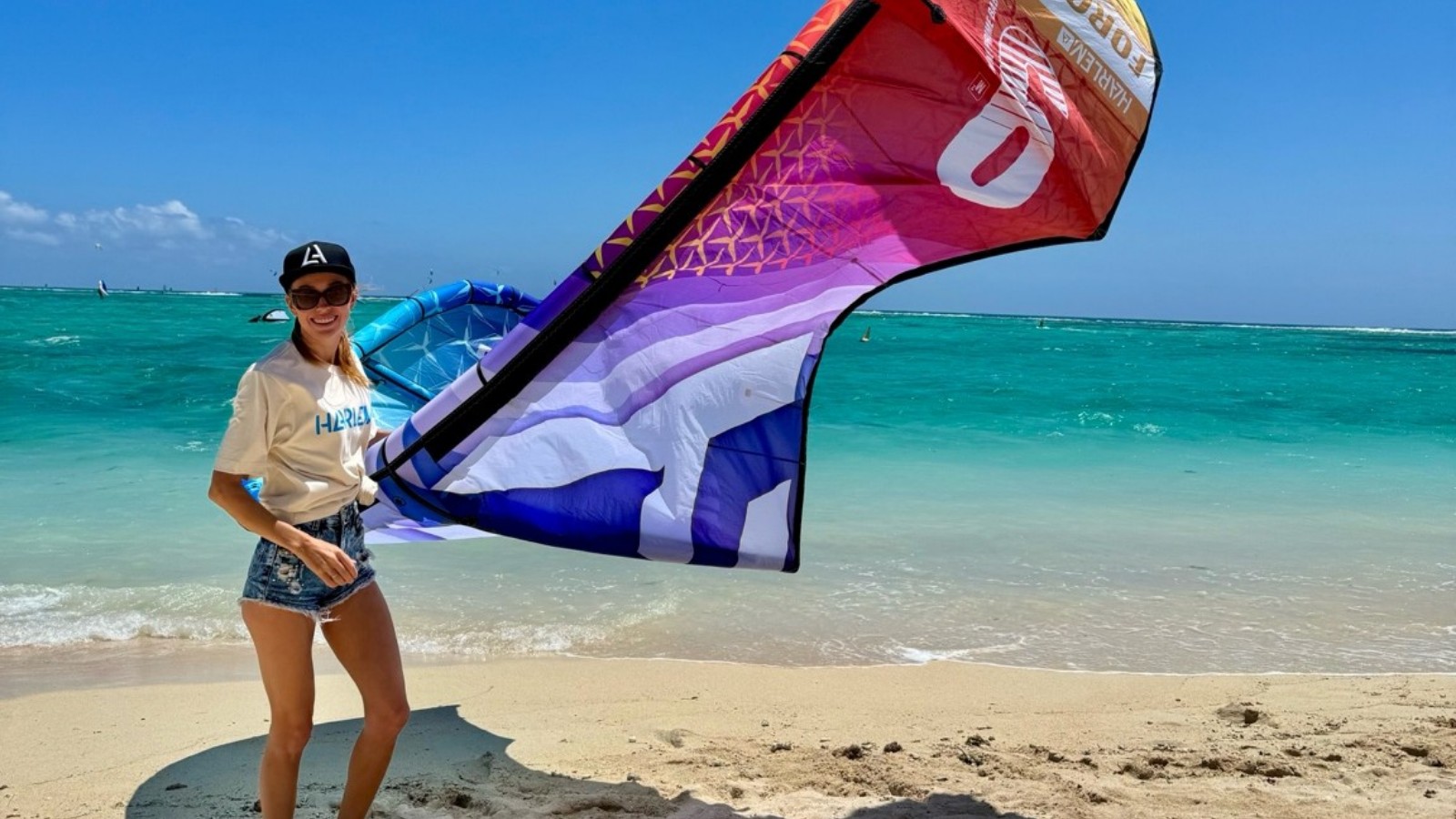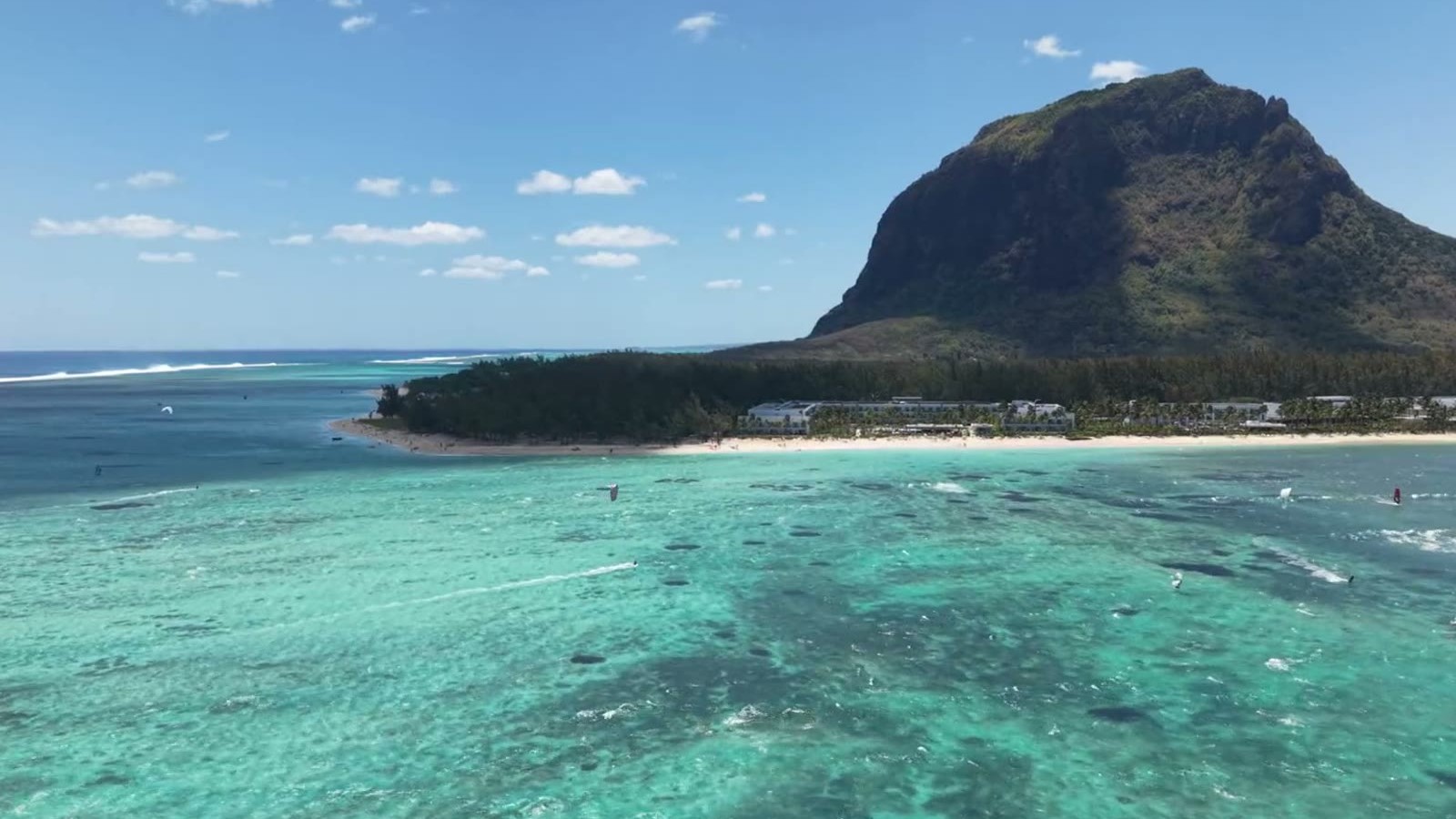
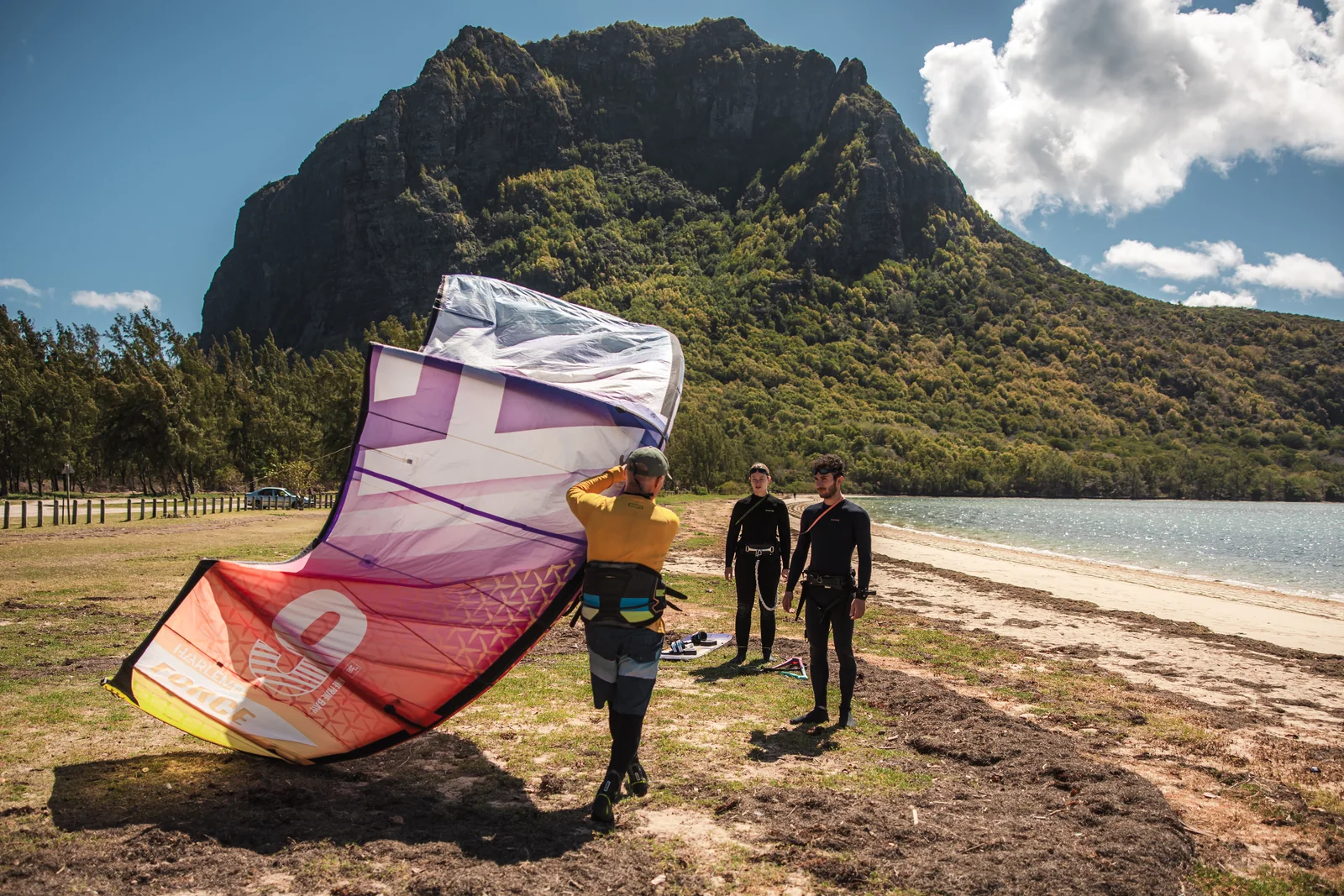
The board is still on the grass. Beside it lies an open kite, with the lagoon beyond. An instructor demonstrates a movement while two people in wetsuits watch and try it themselves. Several important steps come before the picture of a rider carving through spray. Each person has their own way through them.
A kitesurf training day in Le Morne brings together shore preparation, a clear task with an instructor, exercises in the water and attempts to connect kite control with board movement. In this Kitebelles photo series from Mauritius, two riders share those moments: helping with equipment, taking turns with the instructor and meeting between runs.
Small preparations come first
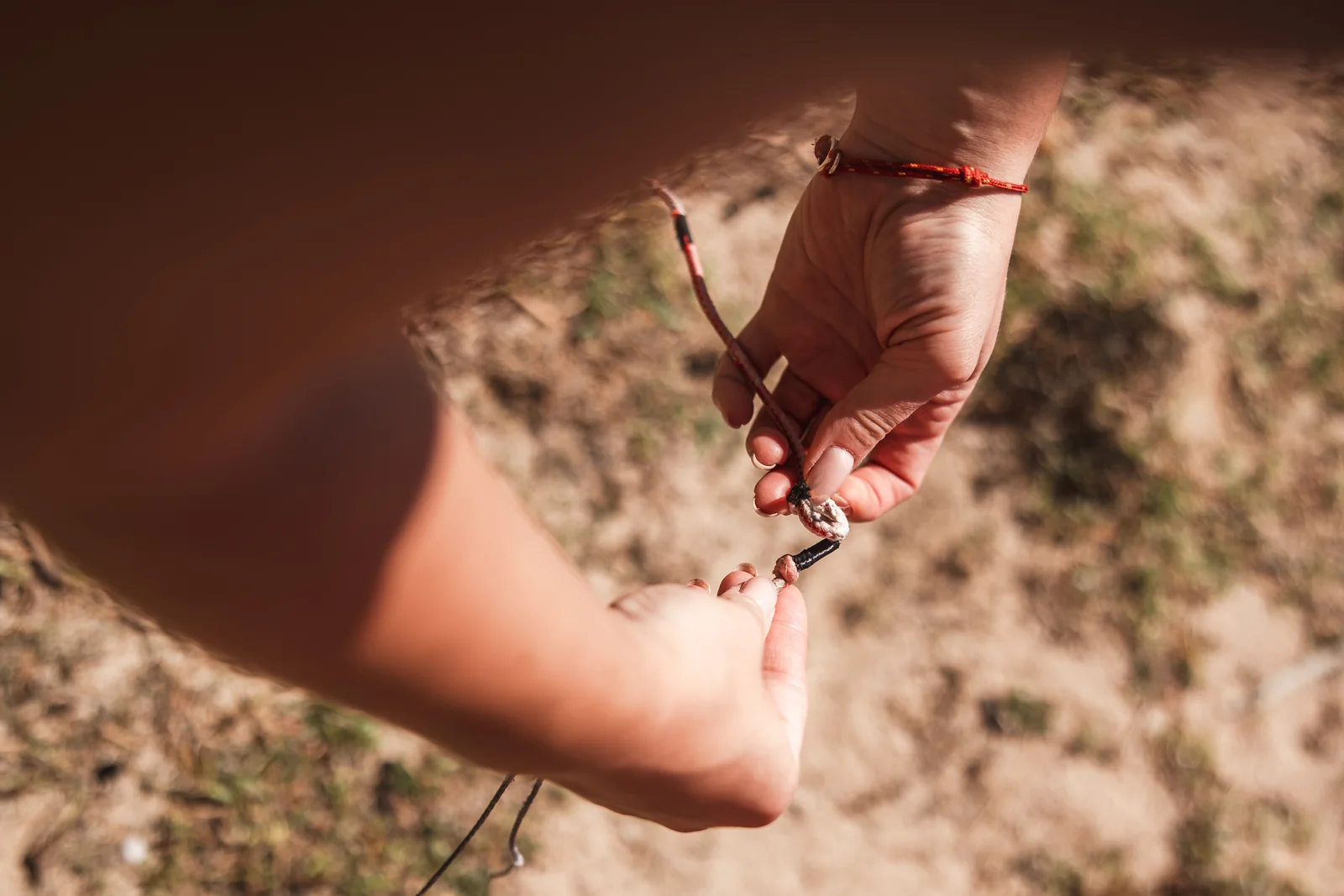
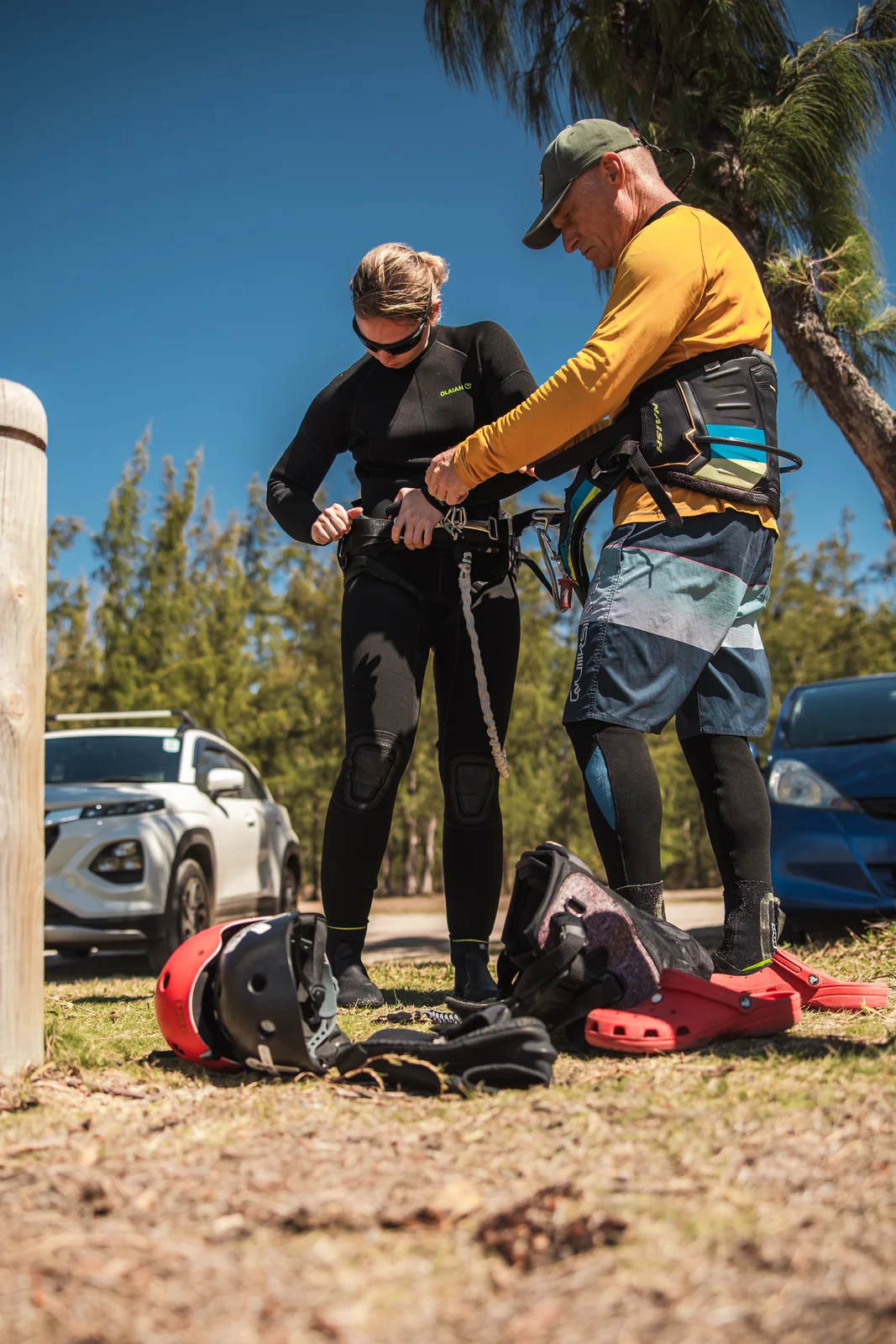
Straighten the wetsuit, adjust the harness, prepare the kite. The photographs hold onto these details: hands connecting lines, a board beside someone’s feet, help with equipment. On shore there is time to pause, ask a question and look closely at something that will demand attention on the water.
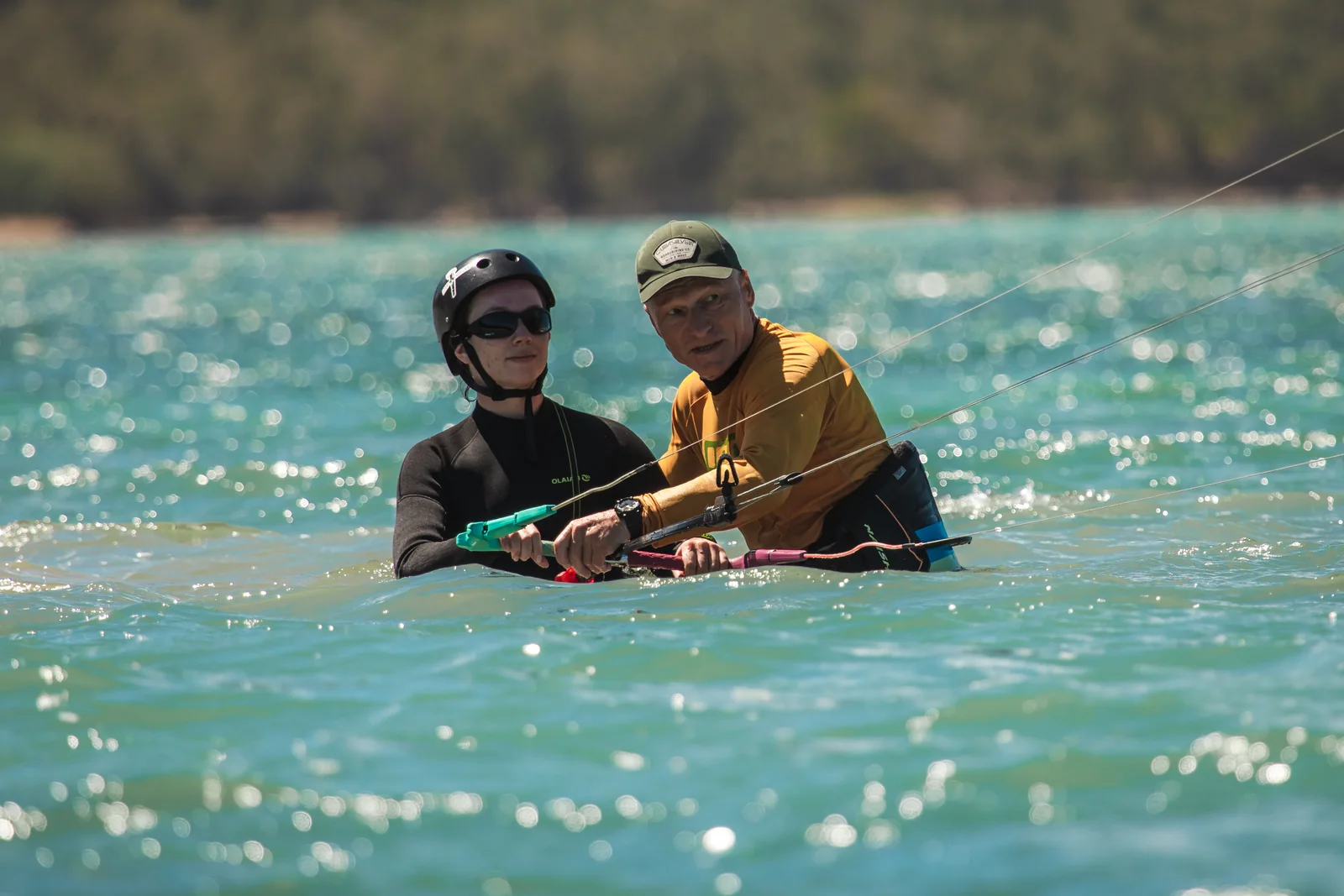
The instructor stands opposite both participants beside the kite. Each brings a different starting point: what feels familiar, what still needs thought and what to work on today. That is where the session’s goal begins.
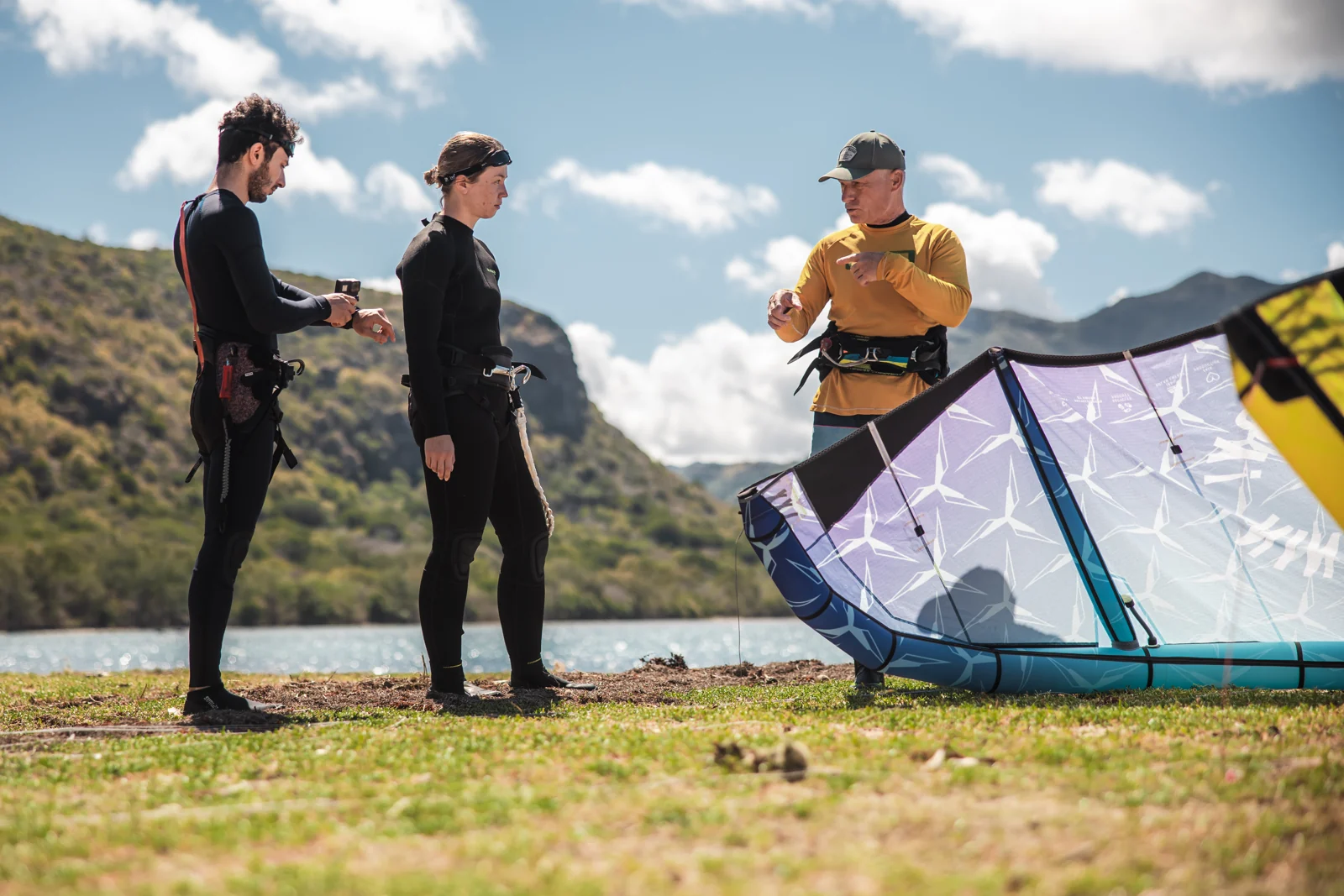
For someone starting from scratch, preparation includes assessing the spot and wind, learning about safety systems and controlling the kite. These foundations appear in the IKO Discovery course. If you have had lessons before, the instructor needs to understand which skills you remember and what needs revisiting.
Rehearse the movement on shore
One of the most expressive scenes happens on dry land. A participant sits with the board in front of him; the instructor holds his hands and helps rehearse getting up. The lagoon is only a few steps away, but attention rests on a single movement.
Breaking a complex task into parts gives you space to notice body position, hear an explanation and try again. Later, the pull of the kite and the water beneath the board will join that familiar movement.
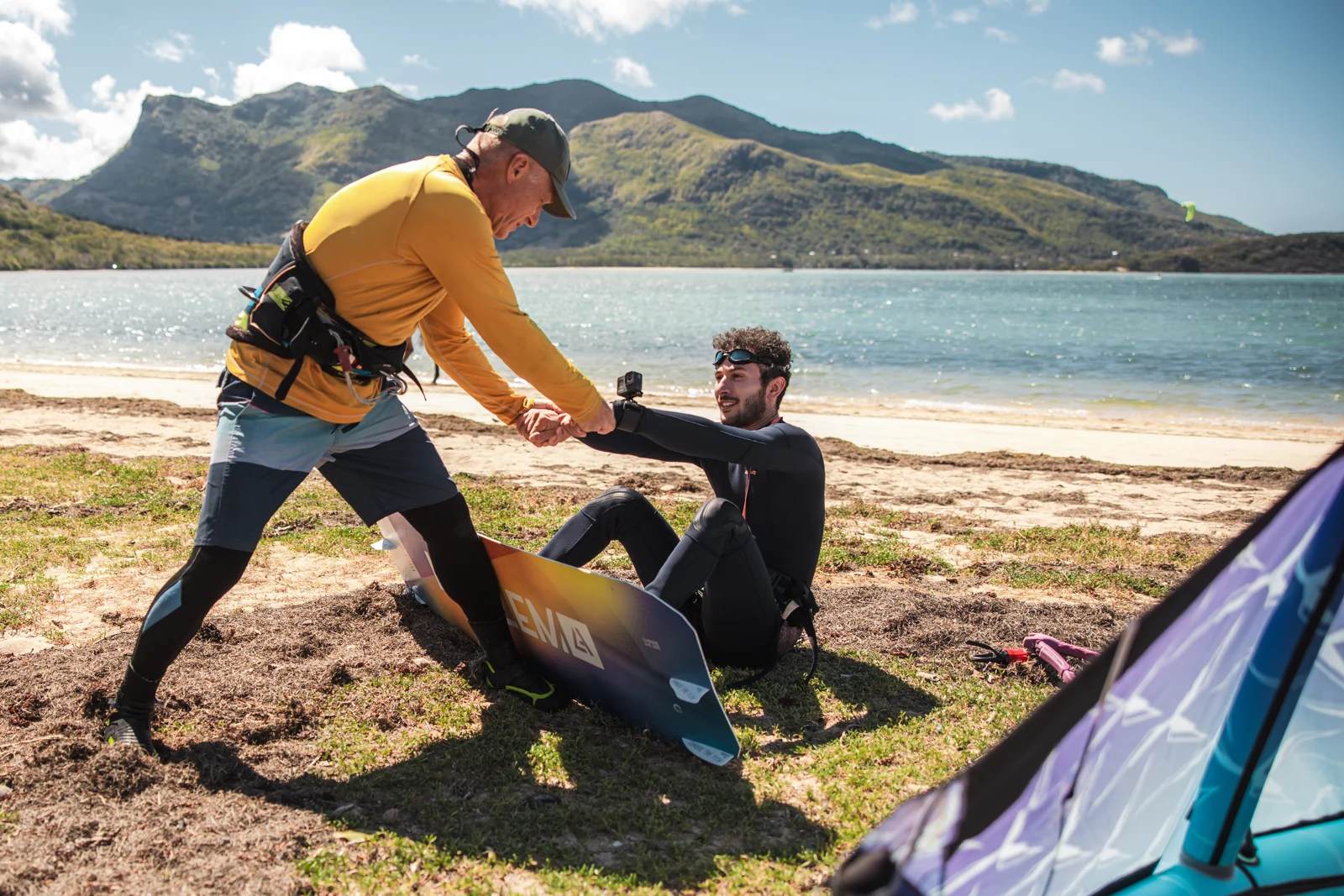
Training together also means watching an exercise from another angle. While one person tries, the other observes. Both will still need their own attempts: seeing a movement is only part of learning it.
In the water, attention turns to the kite
Now the photographs show helmets, a control bar and eyes looking up along the lines. The instructor stays close, watching and helping. The shore explanation meets the real pull of the kite: where is it moving, and what changes when your hands move?
This part of learning can disappear from a short kitesurfing clip. Here it has room. The two riders take turns, each works with the instructor, and pauses separate their attempts.
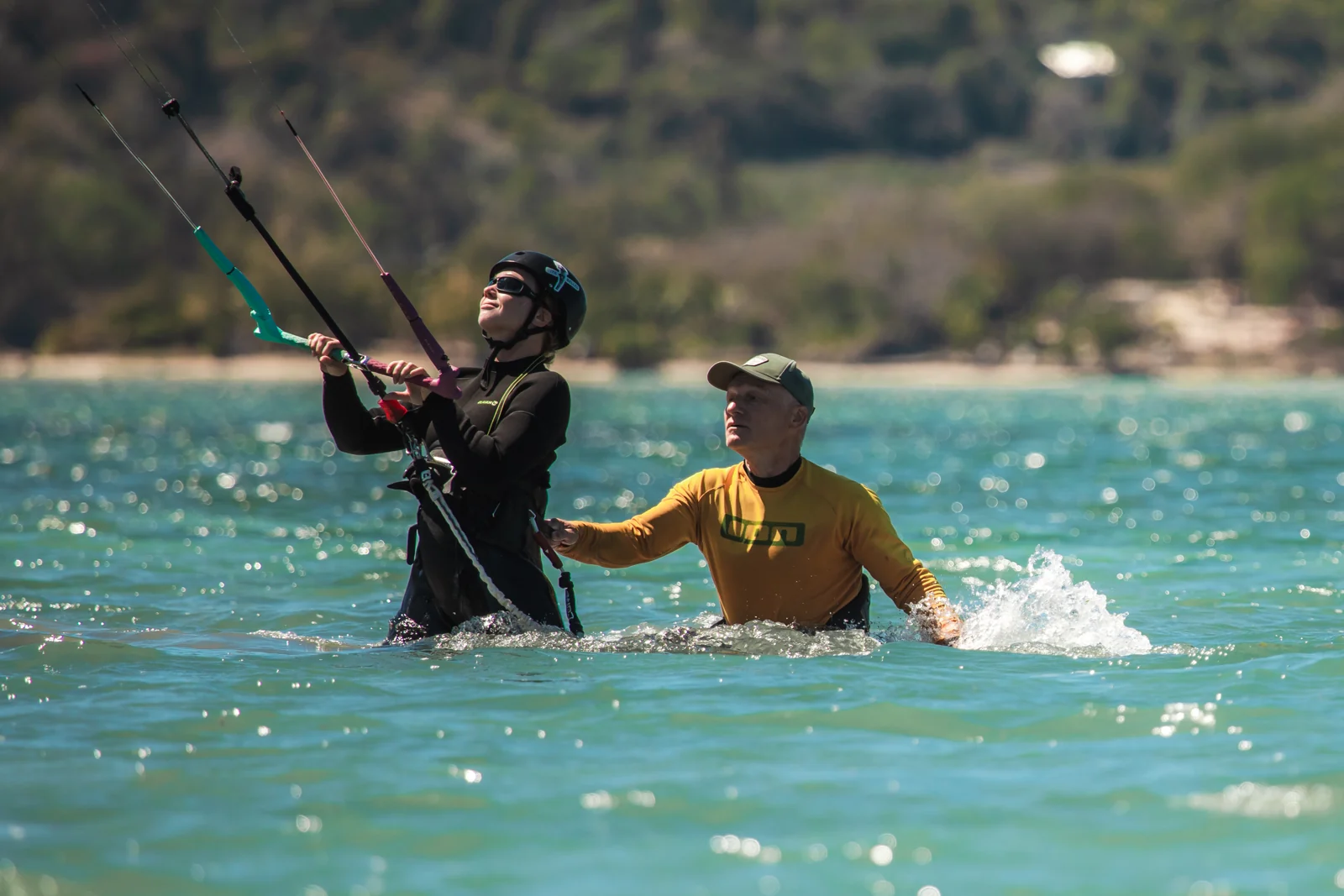
The interesting part happens between attempts
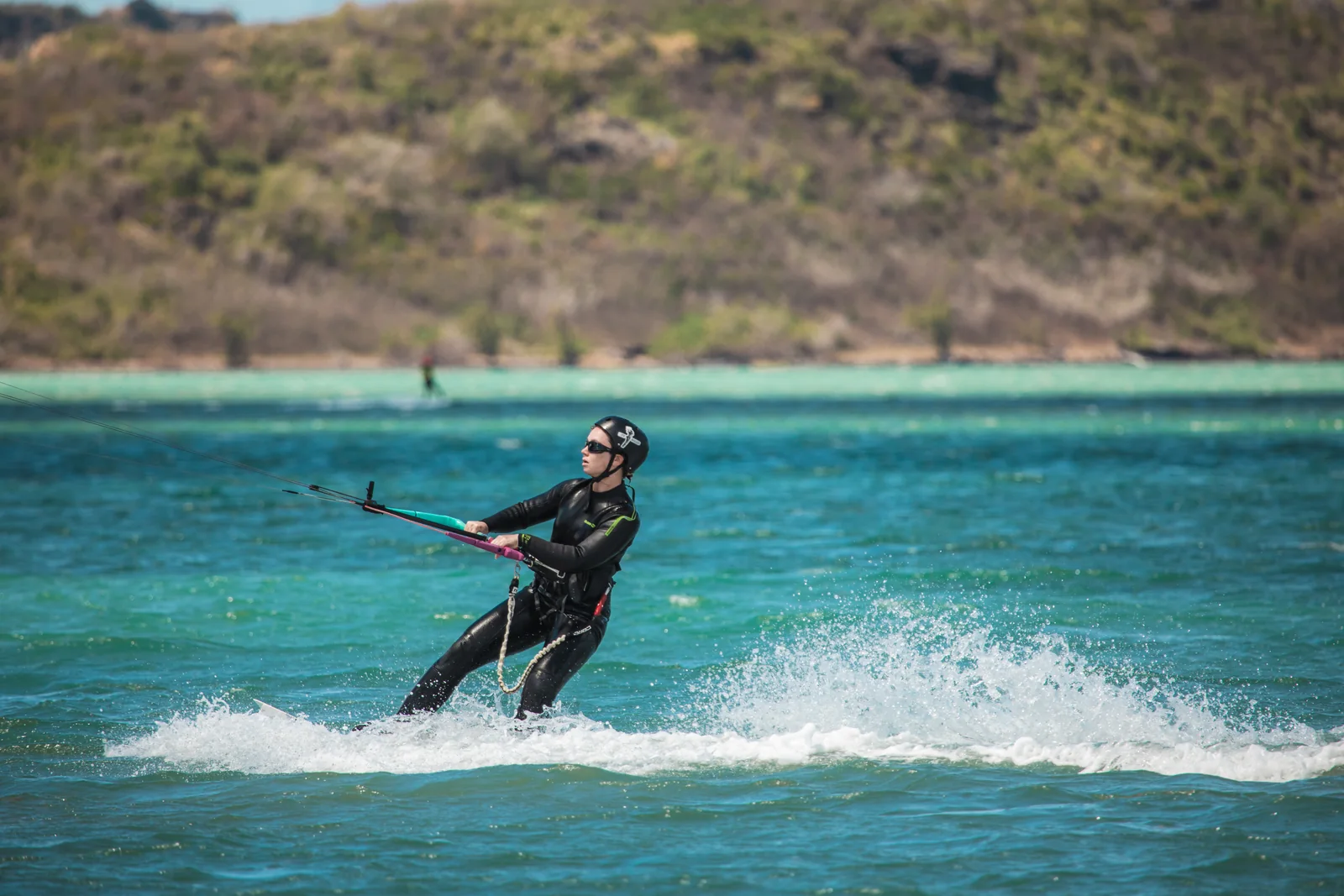
The board comes into position for a waterstart. In one frame the rider is still sitting in the water; in another the board is rising to the surface. Then come spray, a short ride and another attempt.
Each try gives a reason to return to one detail. Was control maintained? What changed since the previous start? What is the instructor pointing out now?
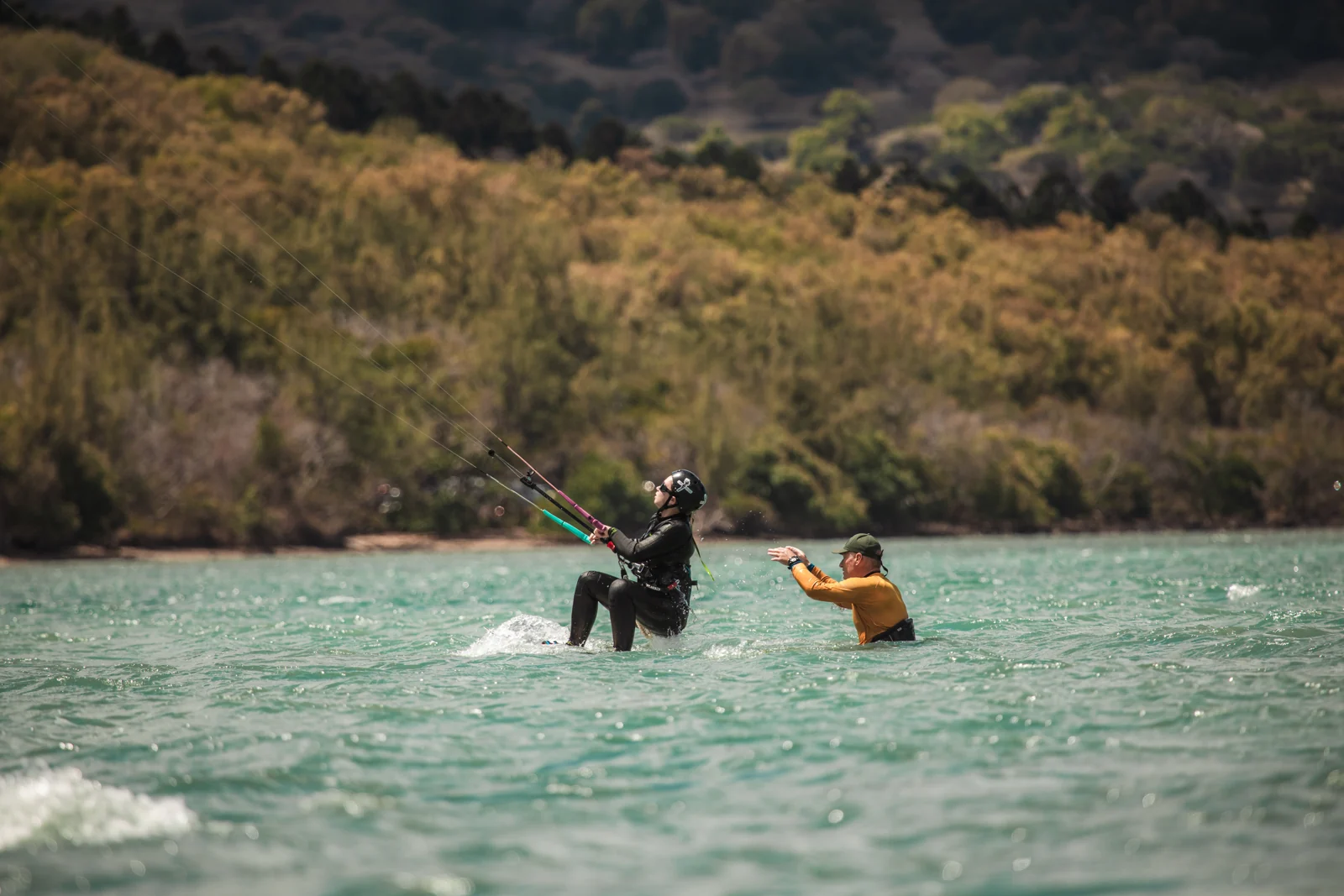
When you train as a pair, it is easy to compare yourself with the person beside you. Your own previous attempt is a more useful reference. Today’s task might be calmer kite control, better preparation for a start or repeating a familiar ride. The pace depends on experience, conditions and the skill you are working on.
Each rider has their own run
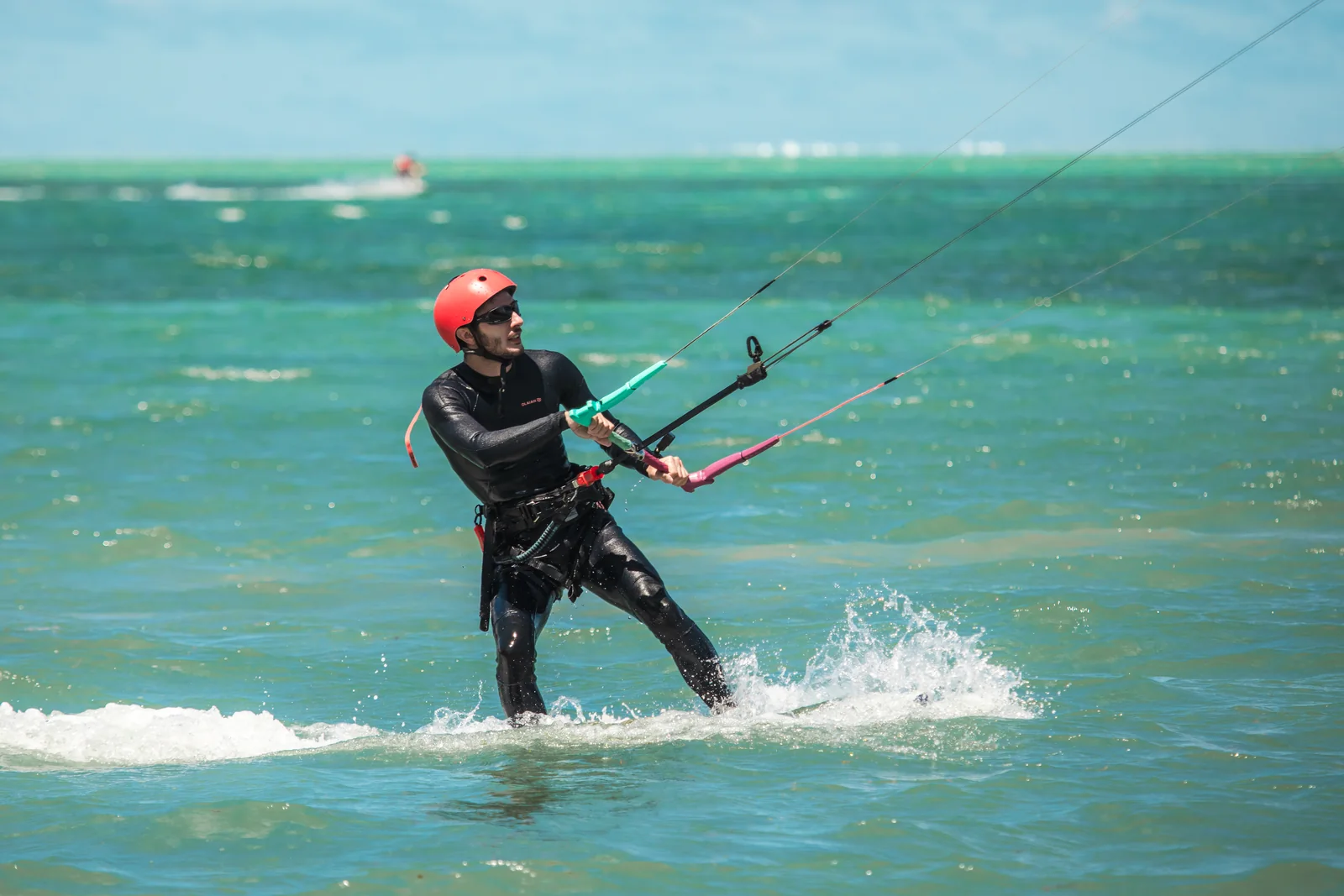
The series includes both participants riding. Behind the black helmet is a bright trail of spray; beneath the red helmet, a concentrated gaze and the lifted nose of the board. These are the photographs that make you want to keep the whole day.
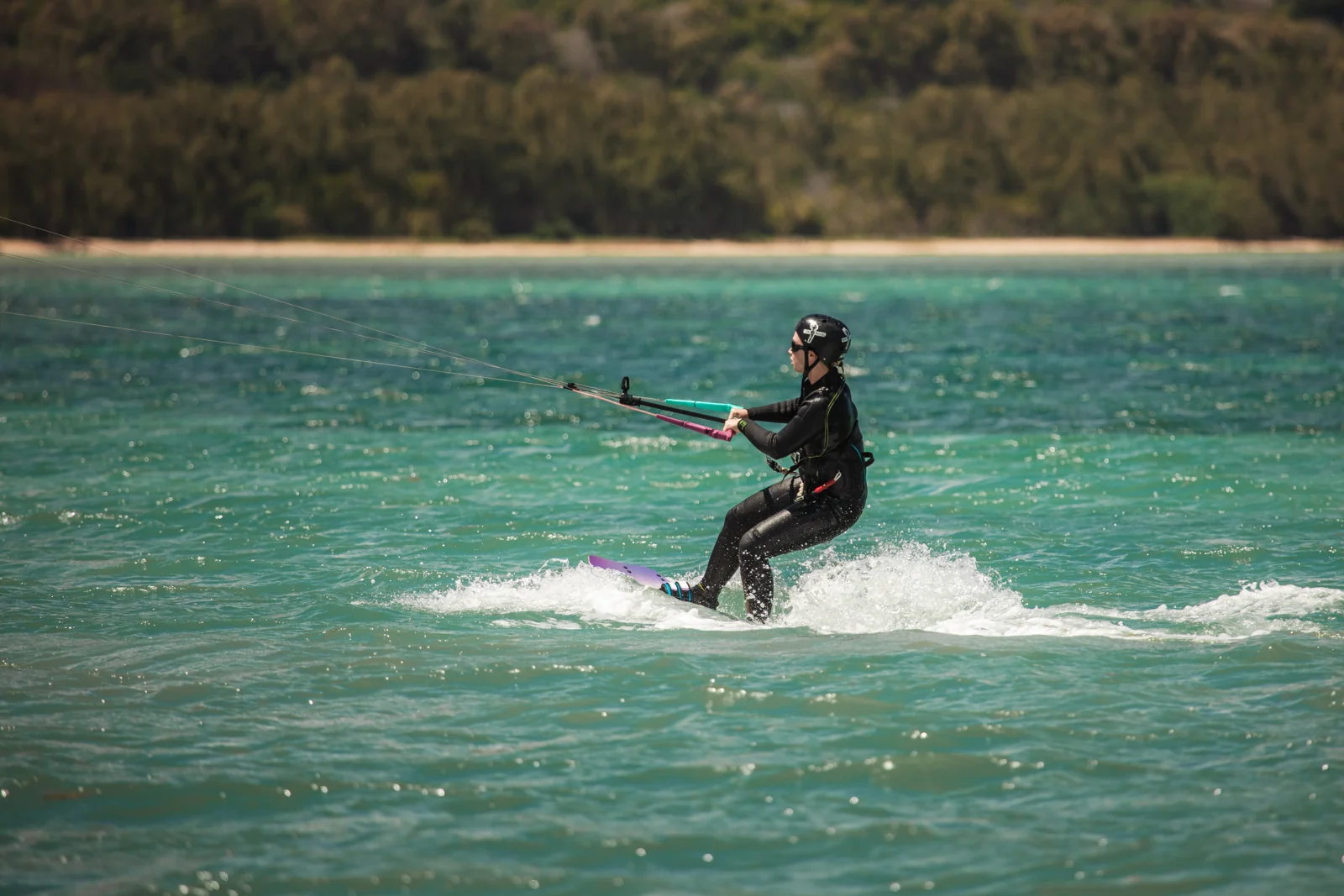
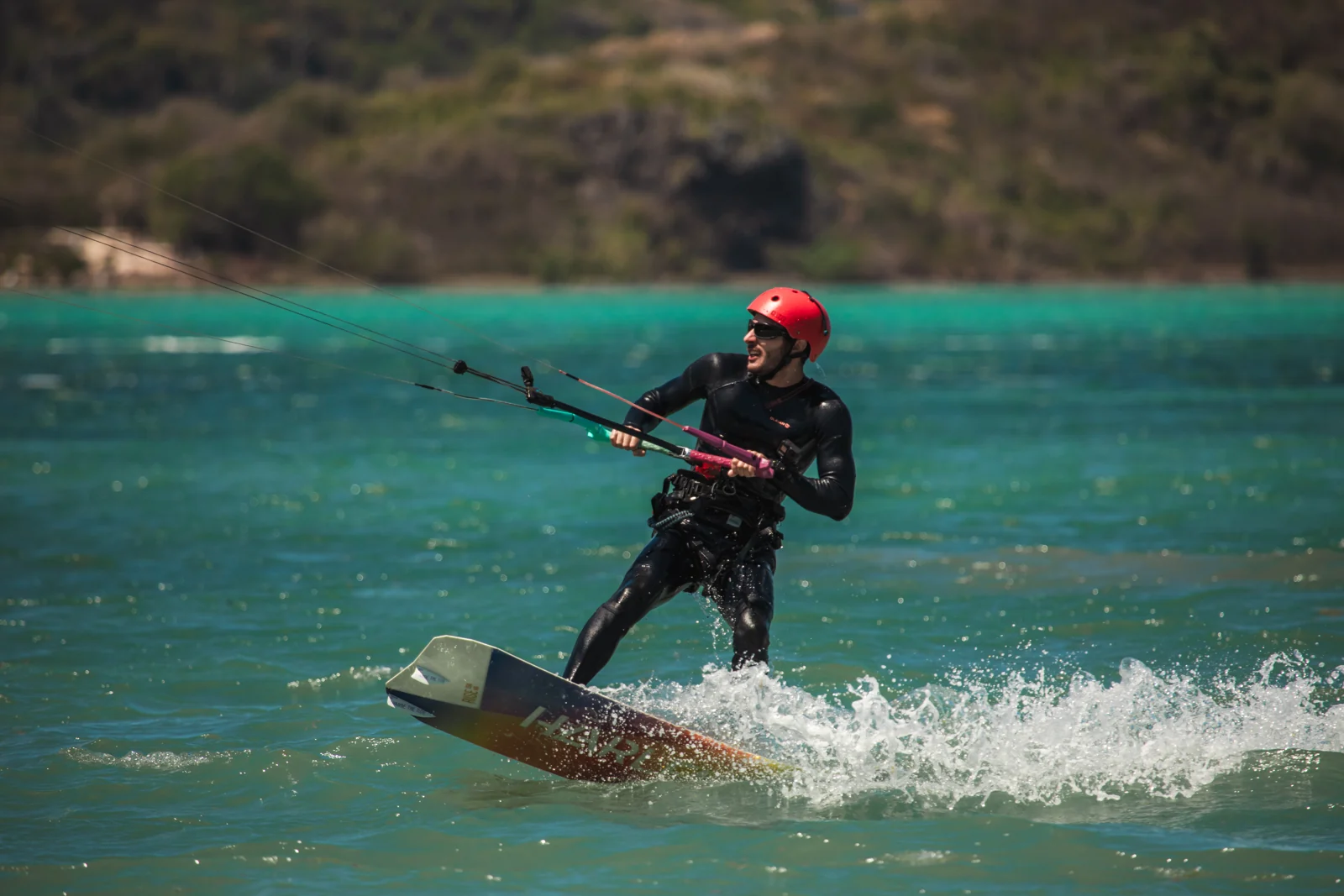
A photograph records a moment. Further progress depends on repeating the skill, stopping and responding to changing conditions. The run becomes part of learning, with the next task discussed together with the instructor.
Return to shore together
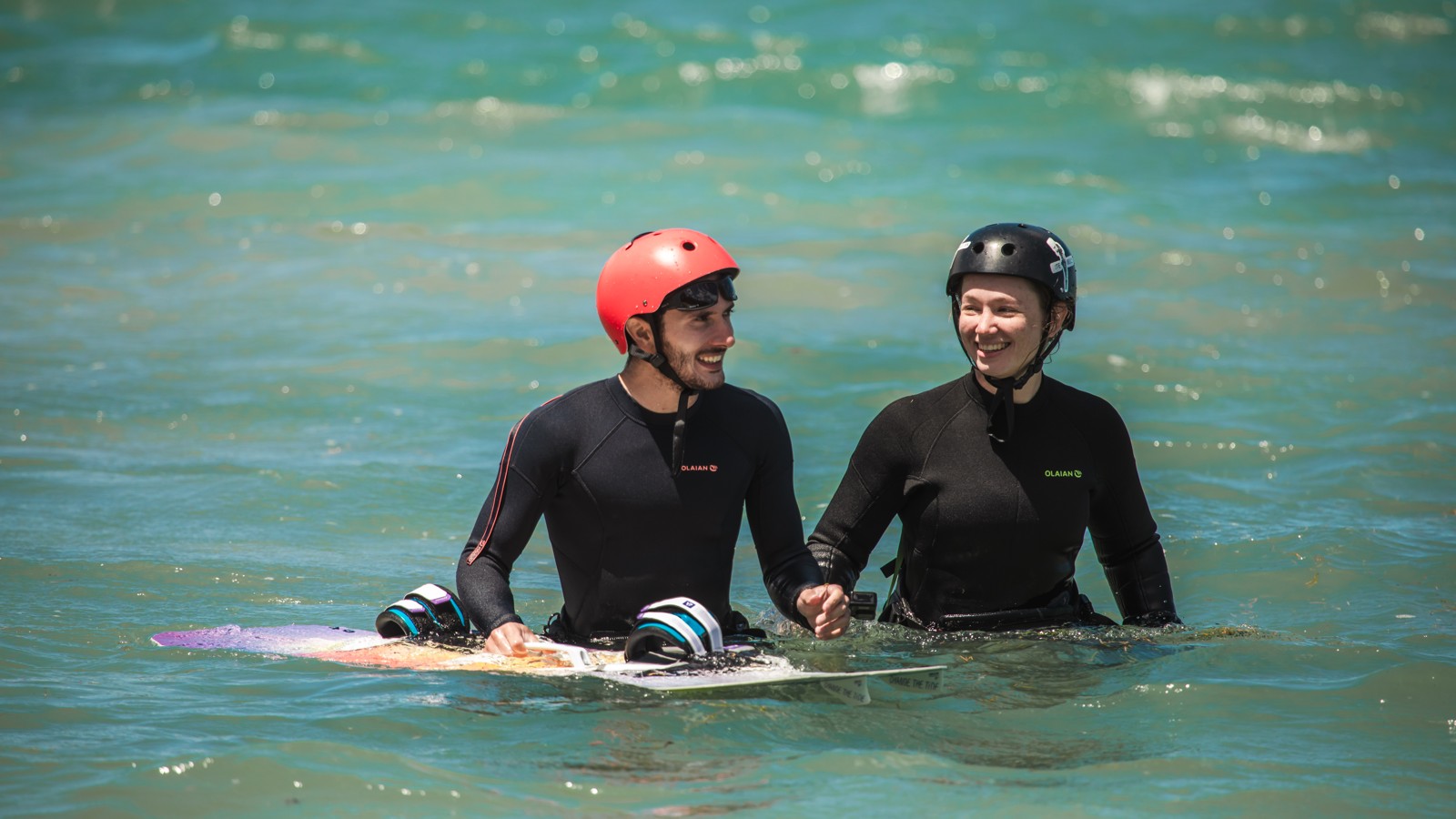
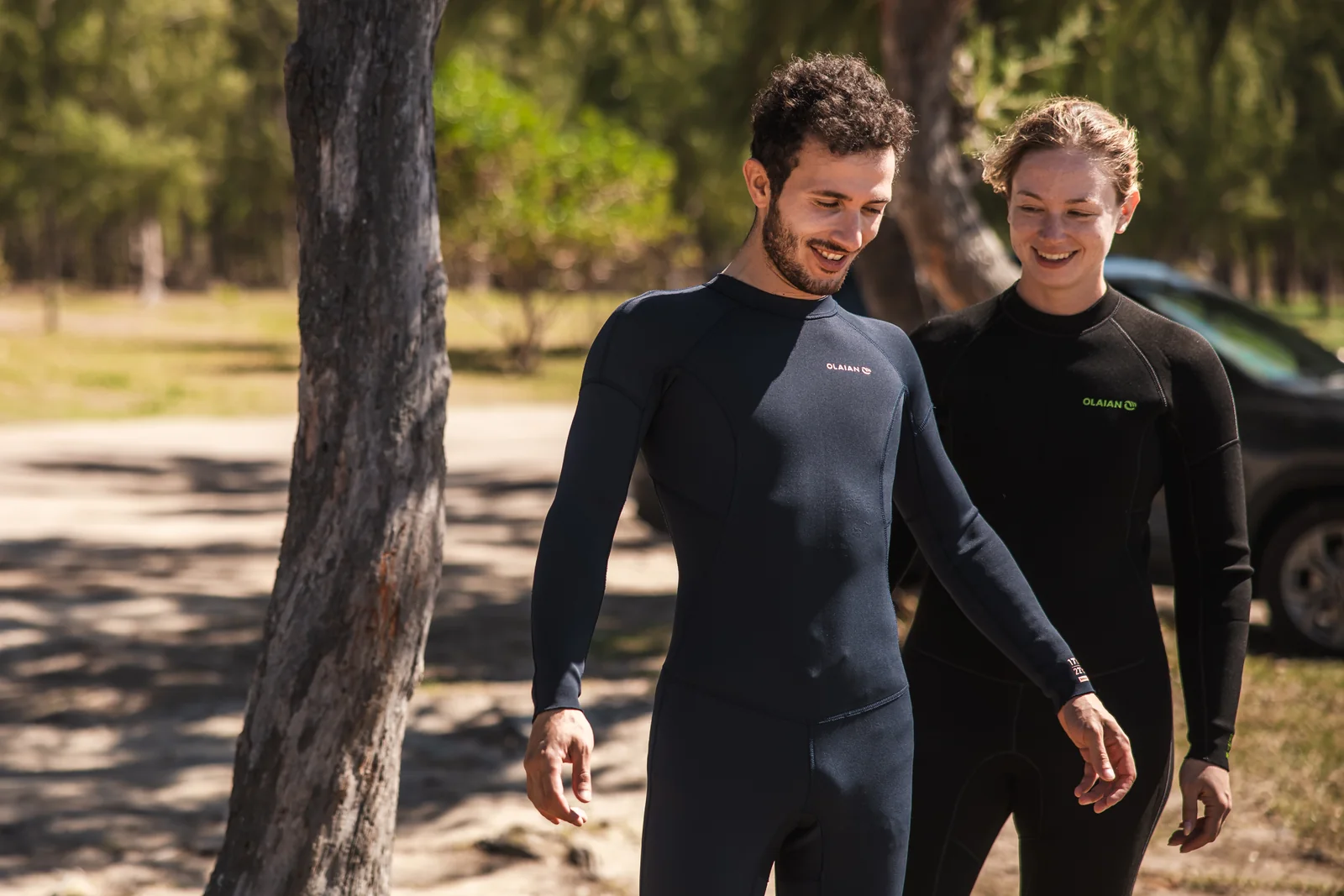
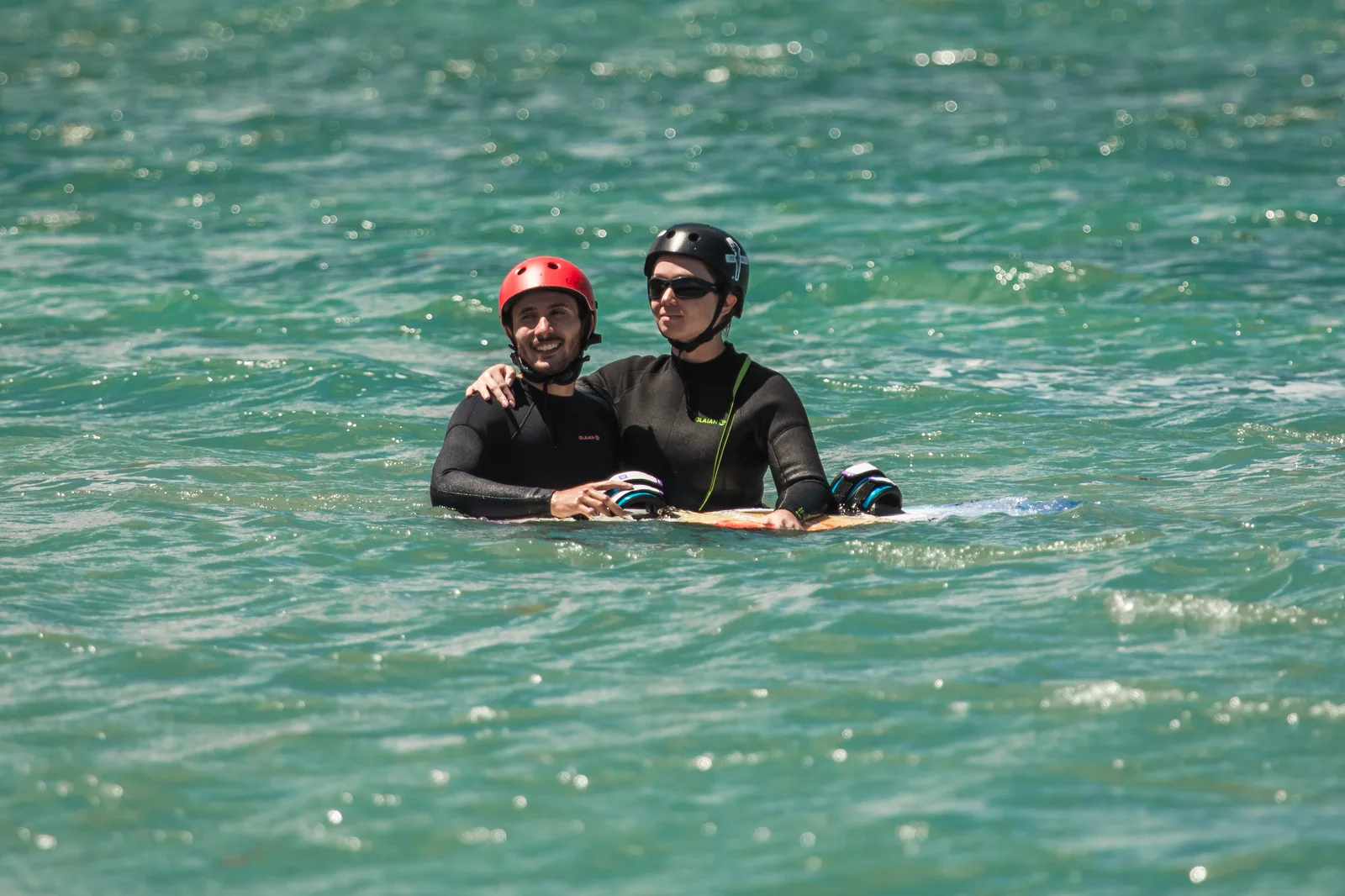
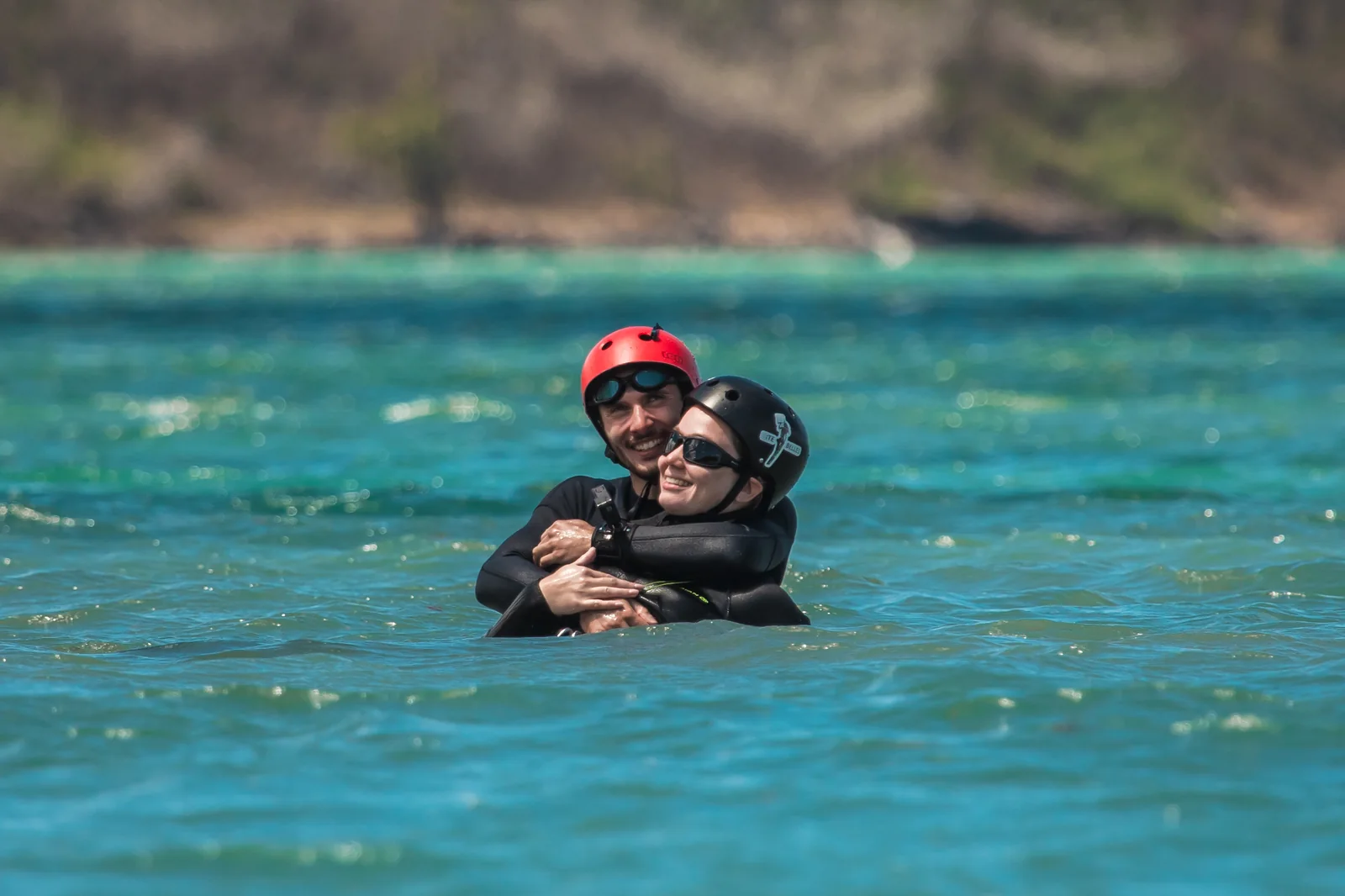
Towards the end of this story, the two riders smile beside their board in the water, then walk along the sand with a board under an arm and a helmet in hand. After the concentrated expressions at the bar, these simple frames bring the day to a close.
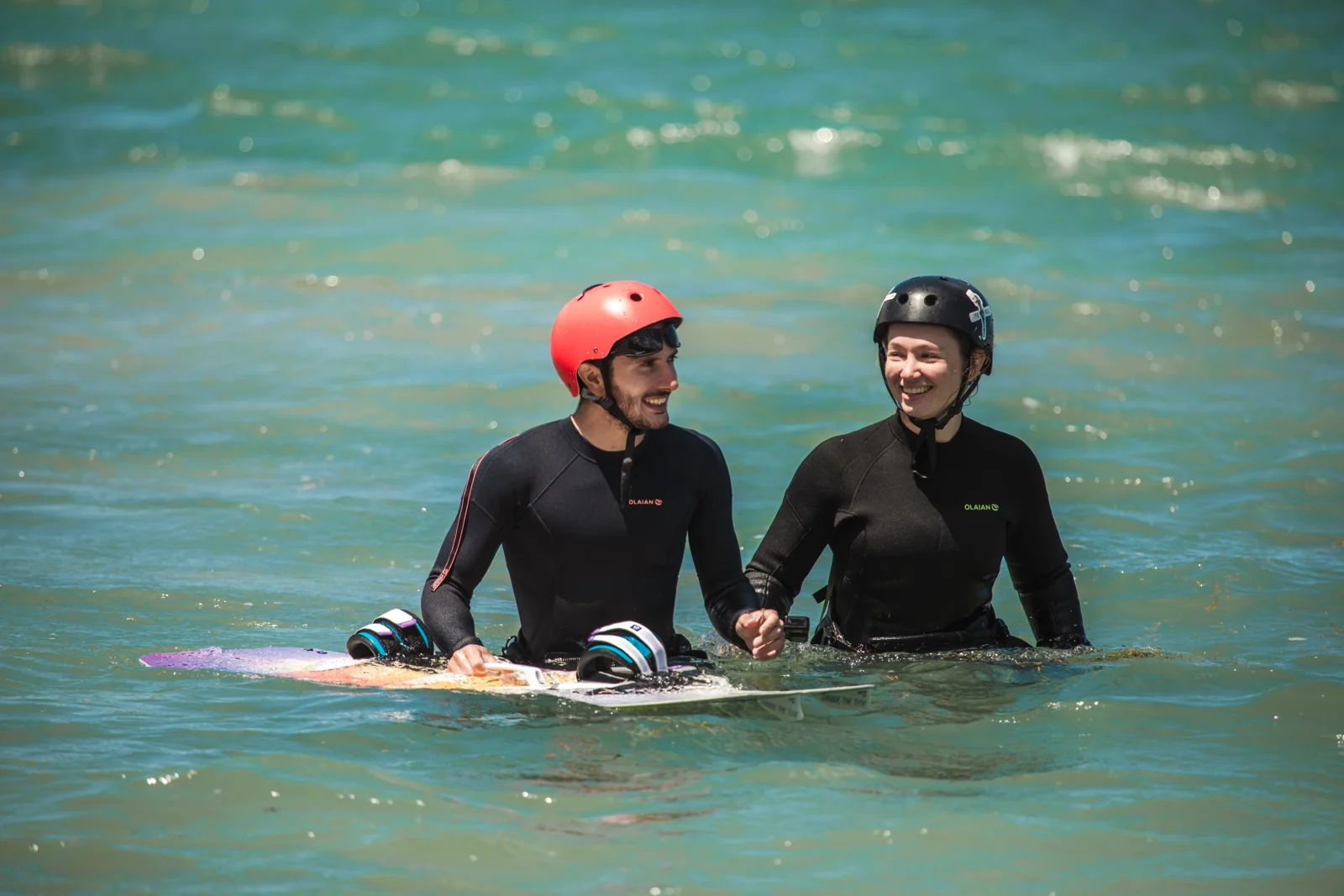
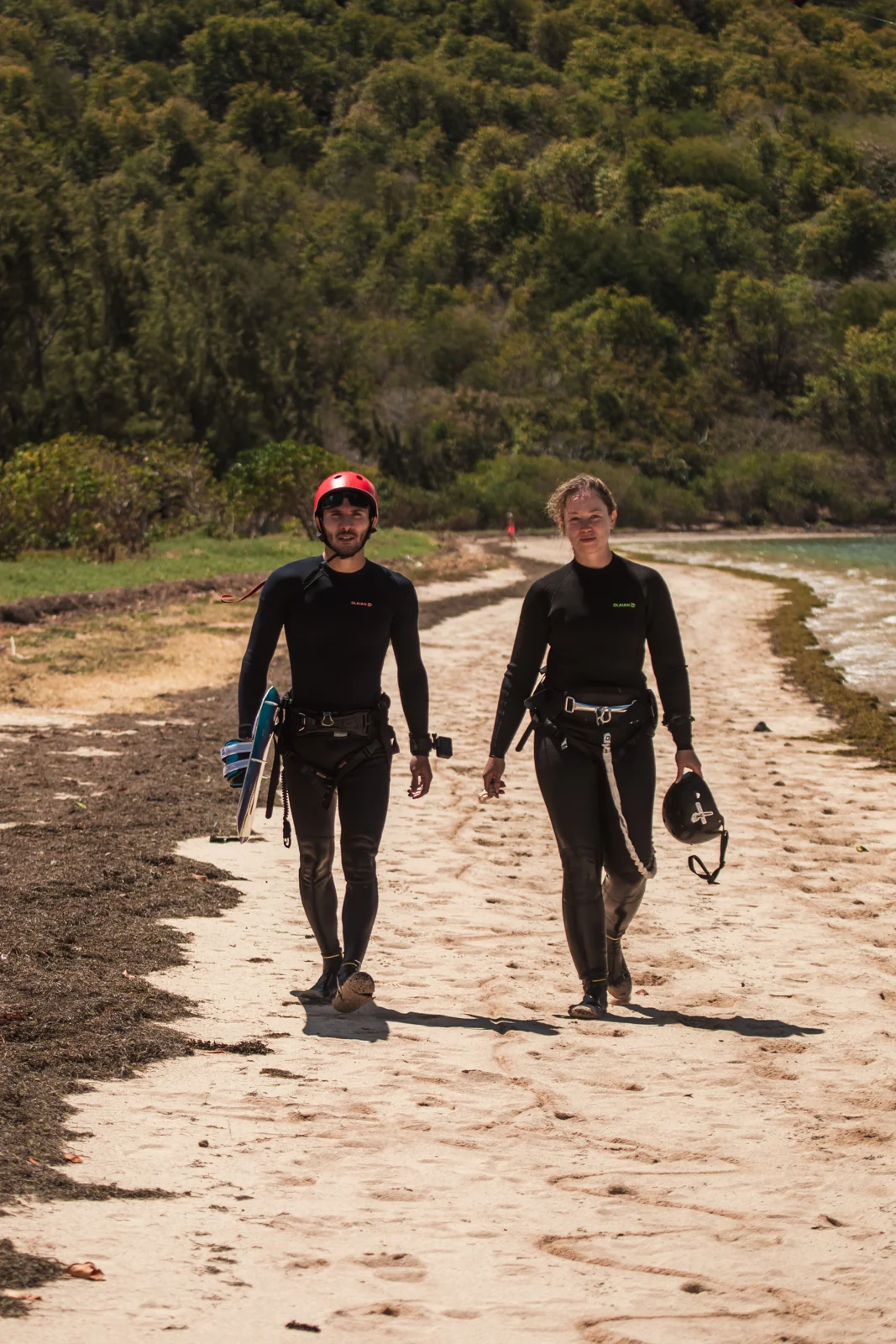
Training for two leaves room for individual goals and shared memories. You see the other person’s attempts, offer support between turns and later discover details in the photos that escaped your attention on the water.
Plan your training day in Le Morne
Tell the school what you have already tried and what you want to learn. If you travel together, describe each person’s experience: a shared holiday can still include different learning plans.
Kitebelles offers private sessions and a 2:1 format. Both currently last two hours, with equipment, radio helmets and rescue support included. Find formats and current prices on the kitesurf lessons page.
Our first kitesurf lesson guide introduces the sport. Before travelling, read the spot and wind guide and the booking and safety policy; the time on the water depends on conditions.
Would you like a day like this in Mauritius? Send the Kitebelles team your travel dates and each person’s level. We will help choose a suitable starting point.
Frequently asked questions
Tell the school before booking. Exercises and lesson format need to suit each person. Depending on the difference in experience, shared or separate sessions may work better. Kitebelles offers a 2:1 format; discuss whether it suits you with the team.
No. The session’s goal depends on your level and the conditions, and everyone learns at a different pace. These photographs show moments from this training session, not a promise that every beginner will ride on day one.
The school assesses conditions and may reschedule, adapt or cancel a session. Credit or refund terms are agreed before payment and explained in the booking and safety policy.
More moments from the day
Nine more frames from the Kitebelles Mauritius session. Swipe or use the arrows to explore the gallery.
Photos: Agata Karaseva · Photographer’s blog