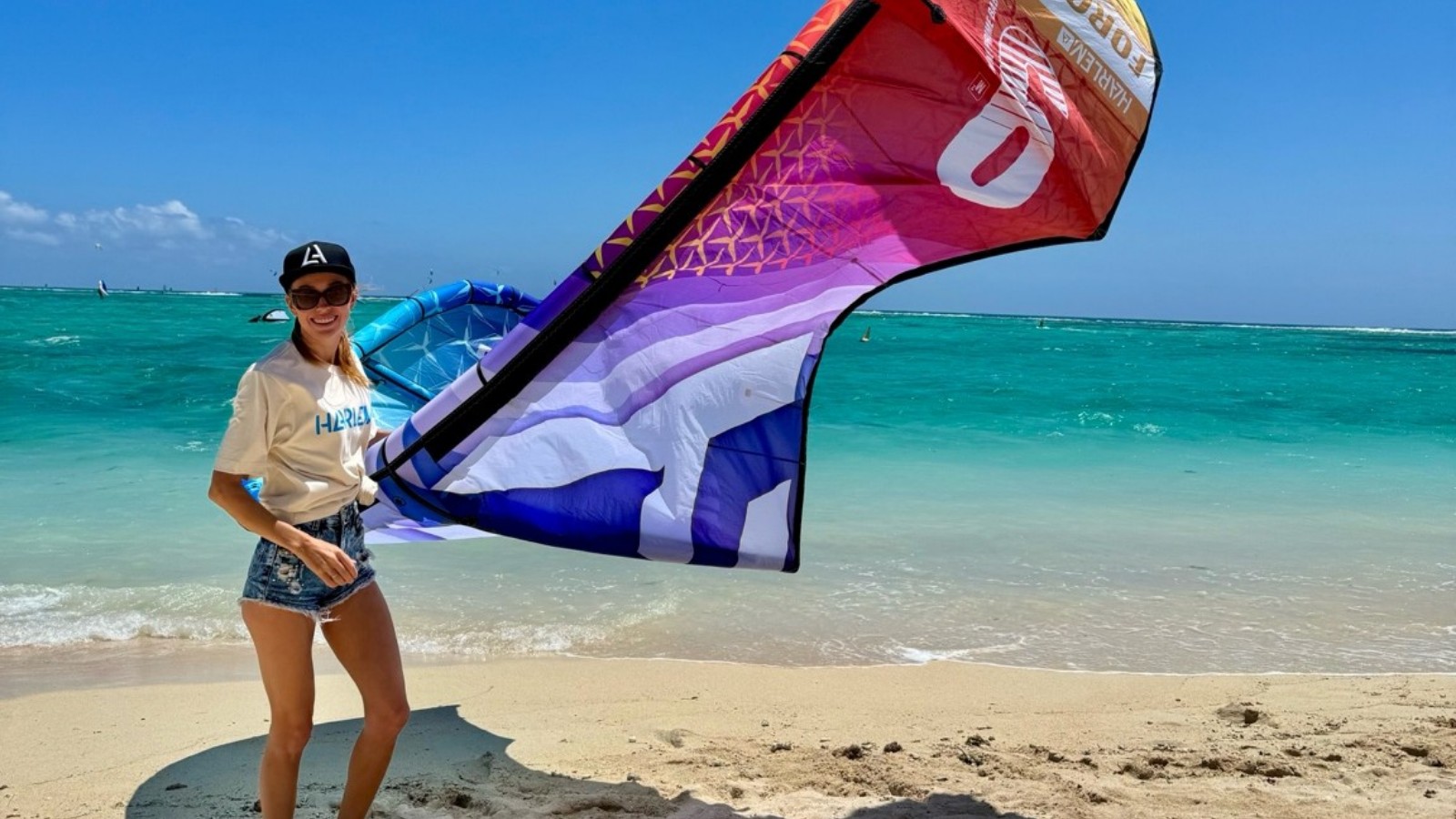
- In the first minutes, you learn to manage pull by softening your hands, moving the bar away and following calm instructions.
- Kitebelles provides the equipment, radio helmet and rescue backup; you bring swimwear, sun protection and water.
- A successful first lesson ends with steady control and a clear next step; the board appears when skills and conditions allow.
The kite comes alive, the bar pulls towards you, and almost every beginner reacts the same way: grip harder. The instructor stays beside you and asks for something less obvious—breathe, soften your hands and let the bar move away. The pull eases. Kitesurfing suddenly feels less like a strength test and more like a language you can learn.
During a first lesson in Le Morne, you read the wind, use the safety system, set up the equipment and begin controlling the kite. If the weather and your progress allow, you continue in the water with relaunches, power strokes or body drag—moving through the water under kite power without a board. You may reach the board too, but there is no fixed minute when it must appear.
How the first two hours unfold
Kitebelles private and semi-private sessions last two hours. The pace comes from the wind, tide, water traffic and your experience rather than a stopwatch. Most lessons move through five clear stages:
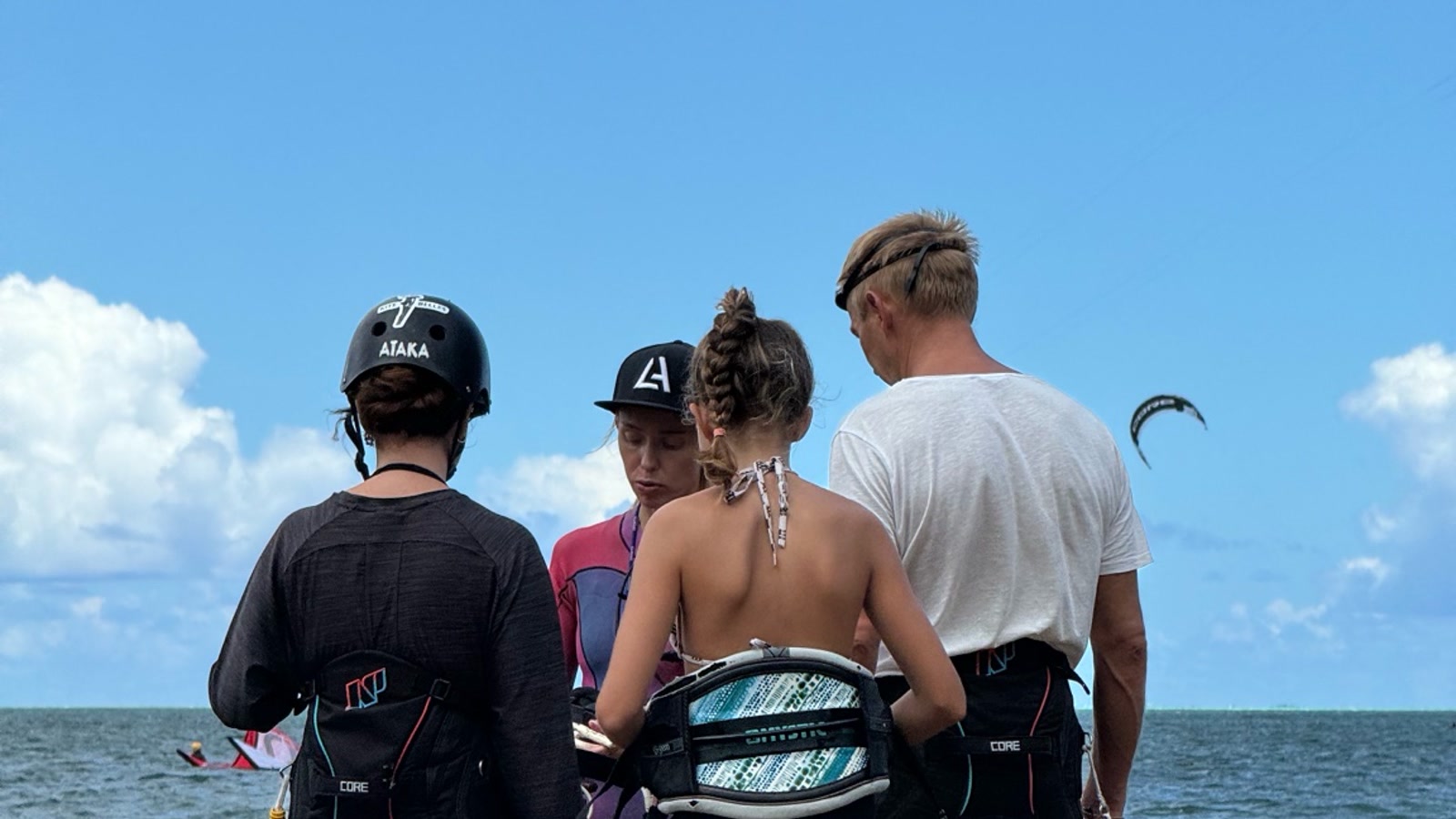
- Read the training area. With the instructor, you identify wind direction, clear space downwind, launch and landing zones, shallow-water limits and the hazards that matter that day.
- Rehearse the safety system. You connect the leash, locate the quick release, practise letting go of the bar and repeat the release sequence before the kite develops serious pull.
- Set up and inspect the kite. The instructor explains the bar, lines and pre-flight check. Soon you can recognise crossed lines and know when a launch should pause.
- Find calm control. You explore the edge of the wind window, stop the kite, fly one-handed and respond to short instructions without staring at the canopy every second.
- Enter the water. Once the movements become consistent, you can try water relaunches, power strokes or body drag. The exact order changes with the learner and conditions.
This sequence follows the IKO Discovery course: site assessment, setup, safety systems, pre-flight checks and first piloting. IKO describes two hours as an average and notes that the learner, weather and location all change the pace.
How to recognise a successful first lesson
A board looks great in a photograph, but your brain has several new jobs to master before it becomes useful. A good result is visible even without a dramatic ride:
- you can reduce power and let go of the bar calmly;
- you can point out the safe downwind area and explain the release;
- you can hold the kite where the instructor asks;
- you move through the water with control and know your next step.
Body drag matters because it is how you will later return to a lost board. If steering the kite still takes all your attention, adding the board creates another urgent task. One student may try it on day one; another may finish with body drag and progress faster in the next session. Both are normal outcomes.
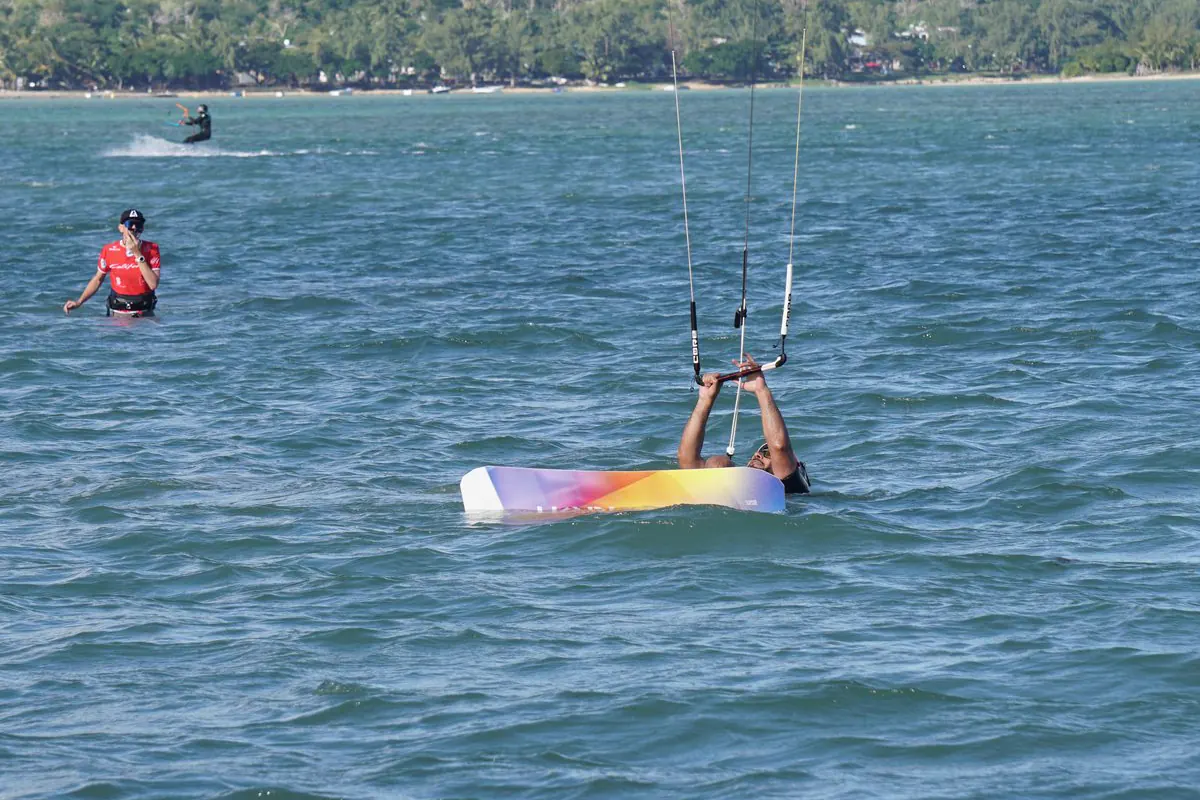
No honest instructor can predict your total lesson count in advance. Count skills instead: controlled launch and landing, body drag both ways, board recovery, kite relaunch, waterstart, stopping and eventually riding upwind. A two-hour session introduces the sport; a series of well-timed lessons makes those actions dependable.
What to bring
There is no need to buy or borrow a random kite setup before your first lesson. Kitebelles selects equipment for your weight, level and the wind, leaving you with a short personal packing list.
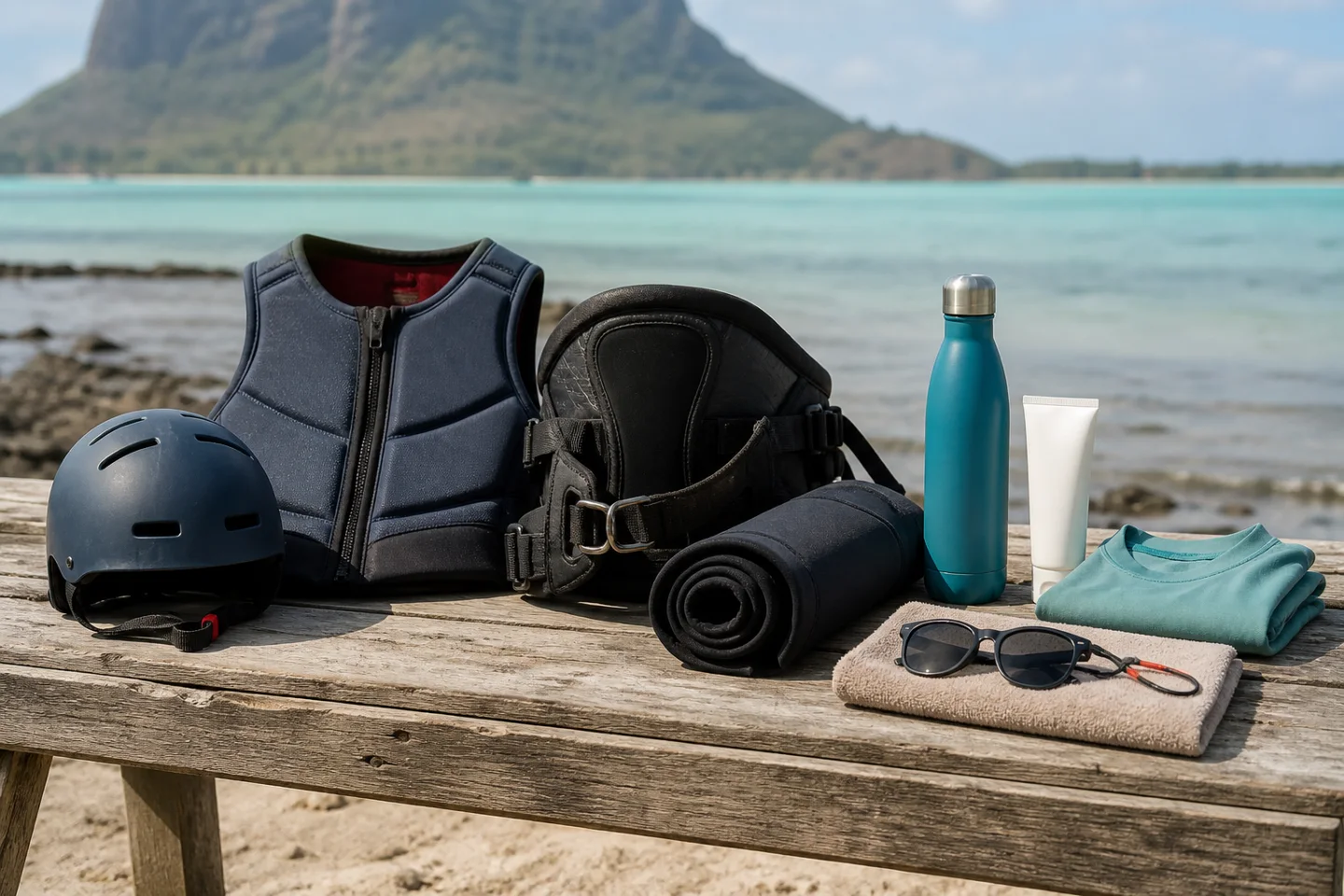
- The school provides: kite, board, harness, wetsuit, impact vest, radio helmet and rescue backup.
- Bring: swimwear, secure sun protection, drinking water, a towel and dry clothes. Sunglasses need a retaining strap near the water.
- Before you start: remove jewellery that may catch and tell the instructor about injuries, medical concerns, limited swimming confidence or strong anxiety. If you carry essential medication, explain where it is.
Why timing matters in Le Morne
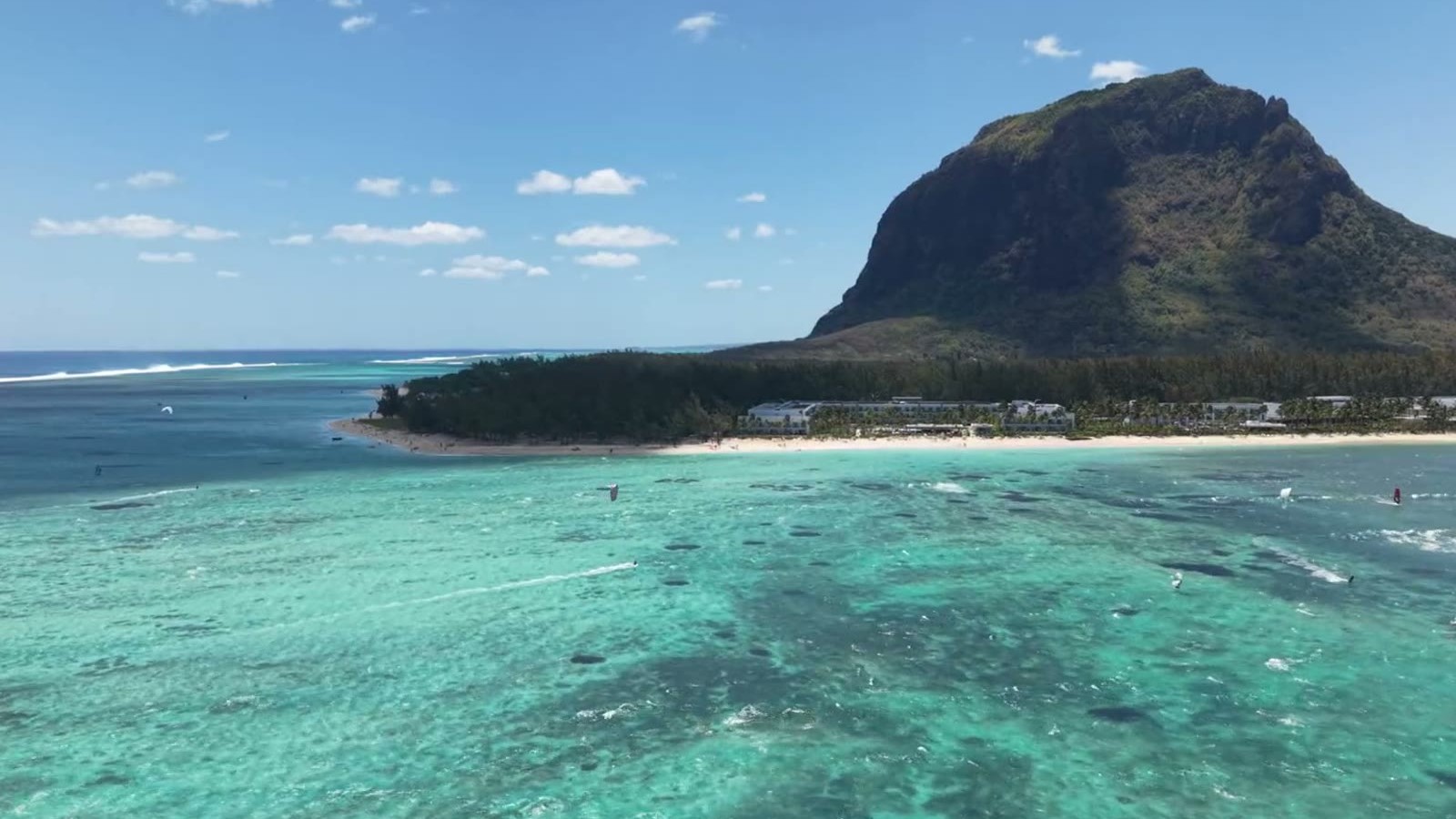
Le Morne’s lagoon can be a generous classroom, but it has no on switch. The instructor chooses the window around wind direction and strength, tide, visibility and the number of people on the water. If conditions stop matching the learner’s level, the session may move, slow down or pause. Reading that change is part of professional spot management.
Mauritius Meteorological Services describes winter as a season of persistent trade winds and warns that strong anticyclones can bring powerful gusts and rough seas. The official Winter 2026 outlook provides seasonal context; the decision for an individual lesson always comes from the day’s forecast and observations. If you are planning a trip, leave several possible wind windows and read our Le Morne spots and wind guide.
Choosing between 1:1 and 2:1
In a private 1:1 lesson, the instructor sees every attempt and can change the explanation or exercise immediately. It is especially useful when time is limited, the kite feels intimidating or you want a completely individual pace.
Semi-private 2:1 suits a couple or two friends at similar levels. While one person practises, the other sees the same correction and prepares for the next attempt; then you switch. Both formats include suitable equipment, radio guidance and rescue backup. Supervised riding is a separate service for independent kiters and does not replace a beginner lesson.
Compare the Kitebelles lesson formats and prices, then send the team your dates, approximate weight, swimming confidence, board-sport experience and preferred language. We will suggest a suitable format and confirm the exact meeting time around the wind.
Frequently asked questions
You assess the training area and wind, learn the safety system, set up the kite and practise controlled piloting. Depending on conditions and progress, you may then enter the water for body drag, moving under kite power without a board.
Kitebelles private and semi-private sessions last two hours. The exact sequence changes with the wind, the spot, your previous experience and how quickly each safety skill becomes consistent.
Possibly, but it is not the promise of a good first lesson. The board comes after you can control and depower the kite, follow safety commands and move through the water with enough consistency.
Bring swimwear, secure sun protection, drinking water, a towel and any essential medication you normally carry. Kitebelles provides the kite, board, harness, wetsuit, radio helmet and rescue backup for lessons.
No previous board-sport experience is required, and technique matters more than arm strength. You should be comfortable in the water and tell the instructor about injuries, medical concerns or anxiety before the session.